

The benefits of a digital-first approach
As corporate reporting becomes more digital, the way reports are produced becomes increasingly important. In practice, there are two main approaches. Companies can create a traditional PDF first and convert it into a digital format afterwards, or they can work digital first, using structured information as the basis for different reporting formats and channels.
The evidence presented in this report suggests that the digital first approach offers clear advantages. It improves accessibility, supports more reliable use by AI and other digital systems, and makes it easier to publish consistent information across different channels.
What digital-first means
MULTICHANNEL Digital-first means: design the report as structured HTML first, then derive every output channel from it.
Digital-first reporting is the practice of designing the annual report primarily as a structured, semantic, machine-readable information carrier, from which any number of human-readable outputs can be generated as needed: a website, a microsite, an HTML viewer, an iXBRL filing, a printable PDF, individual landing pages per stakeholder group, a downloadable spreadsheet of KPIs, an API for analysts, or a feed for the company’s investor-relations app.15
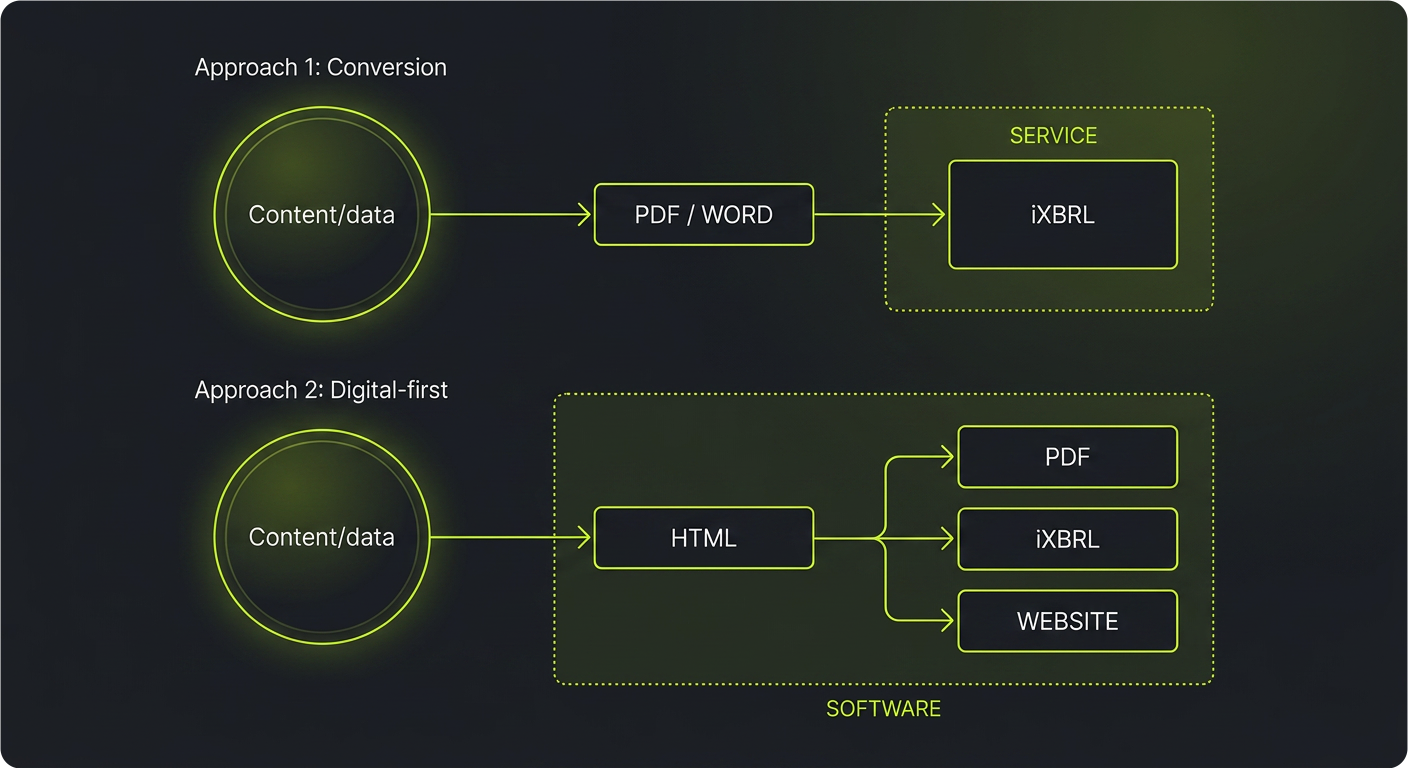
This approach is often referred to as multichannel publishing. The same underlying information is maintained in one central source and then used to produce different outputs, such as an HTML report, an iXBRL filing, a PDF and other digital channels. When information is updated, the change can be reflected across these outputs without having to maintain each version separately. This reduces duplication, improves consistency and makes it easier to ensure that different audiences receive the same underlying information. Digital-first reduces the gap between content and channel. Where a PDF-first process must reconcile every change across multiple disconnected files, a digital-first process publishes everywhere from one updated source.
Digital-first versus PDF-first (the conversion or bolt-on approach)
The main difference between the two approaches is what comes first.
In a PDF first approach, the visual report is created first. Digital versions, such as iXBRL and HTML, are produced afterwards.
In a digital first approach, the structured content comes first. From this source, different outputs such as HTML, iXBRL and PDF can be produced.
This also improves the quality of the digital report. Because the HTML and iXBRL are created directly from the structured source, rather than converted from a PDF, the information is easier for digital systems and AI tools to access and interpret.
PDF-first (bolt-on)
-
Primarily optimised for human visual layout.
-
Designed in InDesign or similar tools.
-
Converted to HTML / iXBRL at the end.
-
Tagging and structure are an afterthought.
-
Errors and drift between formats are common.
-
Not AI-optimized
Digital first
-
Optimised for machines and humans together.
-
Designed in a web based content / data system.
-
PDF, HTML and iXBRL all generated from one digital source.
-
Tagging and structure are first-class citizens.
-
Single source of truth — outputs stay aligned.
-
AI-optimized
Digital-first in practice: multichannel example
CASES One structured source, many channels. The case below show what that looks like in production.
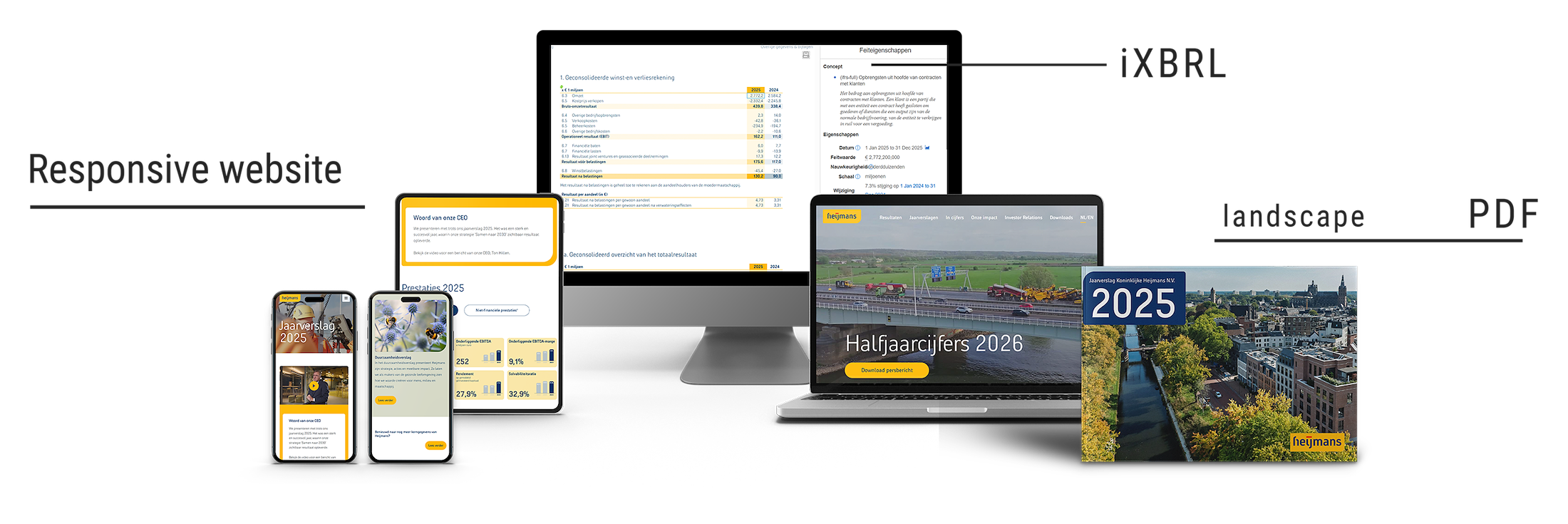
The clearest argument for digital-first is a real-live example. The case below shows how a single structured source can be published across an online report, an iXBRL filing, and a glossy PDF.
Heijmans Heijmans is a leading Dutch construction and infrastructure company, active in housing, buildings and infrastructure. The company generated revenue of €2.77 billion in 2025 and has a workforce of more than 7,000 employees. Since 2022, Heijmans is using the F19 platform to publish its annual report Digital-First as an online report, an ESEF report and a PDF.
What the evidence shows
The benefits of digital first reporting are not limited to structured data, accessibility and AI. A digital report can also make corporate information easier for people to find, explore and use.
Research cited by Martin DeVille shows that companies moving from a PDF only annual report to a digital first approach can see significant increases in online reach and engagement. The Friend Studio analysis found strong growth in both visitors and report downloads after companies introduced digital annual reports.
FIRST-YEAR VISITORS
TWO-YEAR COMPOUND
PDF DOWNLOADS
MAINTENANCE COST
Why digital-first matters
The evidence presented in this chapter points to a broader advantage of digital first reporting. Corporate information is increasingly used by both people and digital systems. A reporting process therefore needs to support both.
Structured information makes reports easier for AI tools, regulators and other digital systems to access and analyse. At the same time, clear writing, good design and effective visualisation remain important for the people using that information.
A digital-first approach brings these requirements together. It allows companies to produce consistent, structured information for different channels and users, without giving up the quality of the human facing report.
This makes digital first reporting a strong foundation for the next generation of corporate reporting.
“The PDF will not disappear. It will become one of several derived outputs from a digital-first source — not the master.”